- Use the purchase reports as a starting point and preserve their access limits.
- Identify ordinary controls safely and use equipment-specific instructions.
- Track a baseline before upgrades so you can distinguish a change from an assumption.
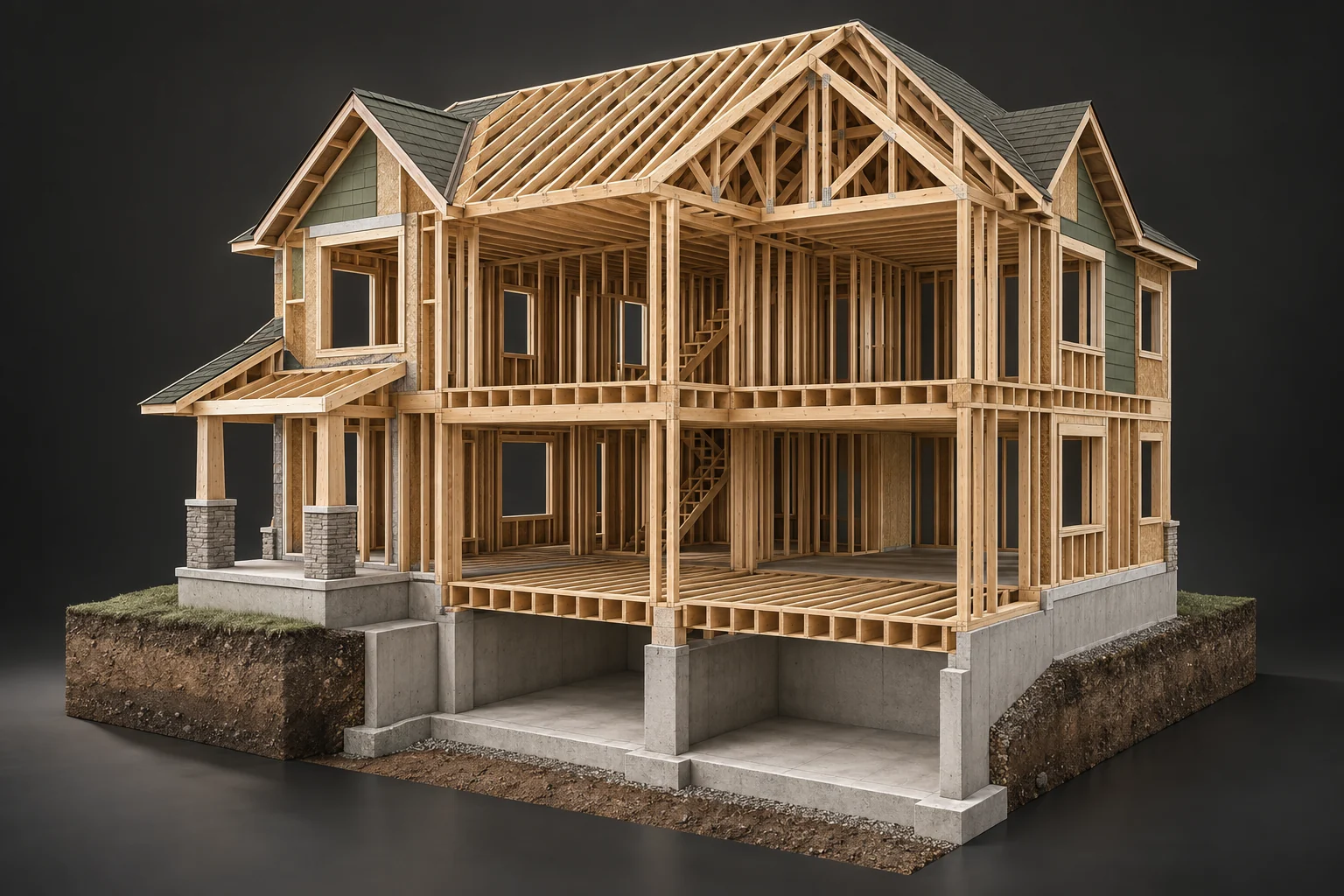
Conceptual architecture. Layout, sizes and routes are illustrative; the picture does not describe your home’s condition.
Explore this in the visual atlas ↗2 picture lessons appear beside the questions in this guide. Use them to understand the explanation, then consider what it means for your home.
Convert the purchase file into an operating plan
Use inspection reports, seller records and decision notes to list follow-up, planned work and seasonal observations. Preserve access restrictions: possession does not resolve an assessment gap from snow cover or stored belongings.
Organize the first days, month and relevant season, with timing guided by actual findings. Hazards require appropriate immediate responses; uncertain intervals need manuals or professional advice. Attach each task to its original finding rather than downgrading it because the home has sold.
Learn controls before you need them
Identify the ordinary main water shutoff, relevant fixture valves, electrical panel location, heating controls and accessible alarm devices. Ask a qualified person to explain controls you cannot confidently identify. Record labels and locations from a safe position, and keep instructions available to the household. Do not force a corroded valve, open an electrical enclosure or operate unfamiliar service equipment merely to complete a checklist. A location note can still be useful while a professional verifies the component.
Calgary’s homeowner guidance identifies these controls and recommends attention to accessible safety devices and equipment maintenance. Use it as orientation alongside the actual manuals and local requirements. A household member should know how to contact the utility, building manager and emergency services. If a CO alarm sounds, Health Canada says to leave immediately for fresh air, call emergency services from outside and avoid searching for the source. That response belongs ahead of any portal troubleshooting.
Create an equipment and document inventory
For accessible equipment, record the model and serial information visible without removing covers, installation dates that can be supported, service history and manual location. Include heating, cooling, ventilation, water heating and any specialist systems relevant to the home. Mark uncertain dates as uncertain. Save receipts and warranties with the equipment they concern, then read conditions and transfer information rather than assuming the seller’s warranty automatically protects the new household.
Separate user maintenance from professional service. A manual may explain an accessible filter change while reserving other work for trained technicians. Ask the appropriate contractor about unidentified equipment, missing instructions or overdue recommendations. The inventory helps future professionals bring the right information and helps you avoid buying incompatible parts. It should not contain speculative condition ratings or estimated remaining lifespans derived only from age. Actual assessment, operating history and manufacturer information provide a better basis for decisions.
Observe before changing the whole system
Record the conditions relevant to comfort and moisture: room temperatures, ordinary thermostat settings, visible condensation locations and any recurring dampness. Keep the weather, time and household activity with an observation. Take measurements consistently so that differences reflect something meaningful. One reading beside a sunny window should not be compared as though it were equivalent to a reading in the middle of the room at night. Avoid unnecessary monitoring of everything; focus on the questions in your plan.
NRCan explains that heat, air and moisture flows interact within a house. Several simultaneous changes can make it difficult to learn why a symptom changed. Where no urgent correction is required, establish observations before undertaking major upgrades and have qualified professionals design changes affecting ventilation, combustion safety or the enclosure. Never block unfamiliar vents to eliminate drafts or alter gas and electrical equipment as an experiment. A baseline is a record for competent decision-making, not permission for hazardous troubleshooting.
Plan radon testing as a new owner
Ask whether previous radon results exist and how the test was conducted. A short reading or a neighbour’s result cannot establish your home’s representative long-term level. Health Canada recommends a three-to-twelve-month test, with at least ninety-one days of measurements, in the appropriate normal-occupancy location on the lowest lived-in level. Follow its current placement and heating-season guidance and the detector instructions. Note the test method, start date, location and normal use of the space.
If you change the use of a basement or make significant building changes, ask how that affects an appropriate measurement plan. Keep results separate from a general inspection report and seek certified assistance where needed. A test plan does not mean the property has already been measured. A mitigation installation does not establish its performance without suitable follow-up. Save the original results, professional work and subsequent measurements so that future decisions are based on an actual record rather than a statement that radon was handled.
A device, a room and a record answer different questions
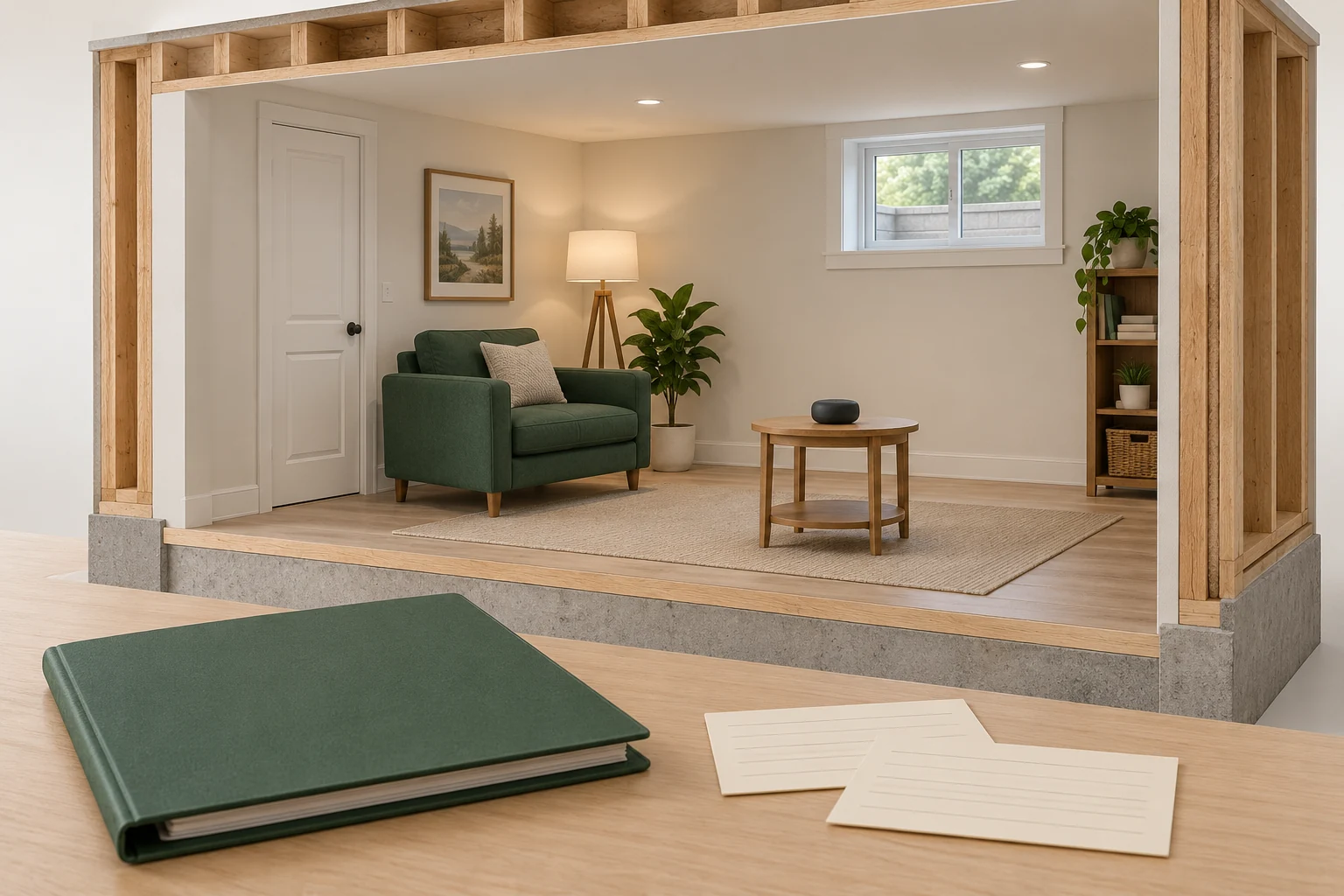
A plain dark rounded case sits on a low interior table. A green chair, closed-looking window and lamp provide room context. Blank lined cards and a closed green folder are illustrative record placeholders; they contain no test dates, concentration or result.
Numbers identify the parts explained below.
- Identify the actual method
The closed rounded case has no display or label. Match the actual device and method to its instructions and retained measurement history; the model does not identify an approved product or show a reading.
- Keep the measurement context
The lined cards and folder are placeholders. The actual dates, averaging period, device history, room and seasonal/operating context must accompany the real result; no date or finding can be read from this artwork.
- Name the occupied space
The chair illustrates a room-use question. It does not prove how this room is occupied, which level it represents or whether the pictured case meets placement guidance. Intended future room use needs its own clearly described context.
What does this illustration leave out?
The case does not identify a detector type, model, method or calibration. Actual placement distances, regularly occupied level, occupancy, measured interval, averaging period, heating-season coverage, data availability and ordinary operating conditions remain unknown. The depicted table position is not a validated placement. Furniture and a closed-looking window do not establish representative test conditions or safe room use. This illustration explains an idea. It is not an installation guide.
Which actual device, location, dates, averaging period and ordinary-use conditions support the radon result I have, and which fields still need to be recovered?
Explore this with HomeAI ↗Opens an editable question. Nothing is sent until you choose to send it.Use schedules that fit the equipment and site
Build the calendar from the manufacturer instructions, specialist recommendations and local seasonal conditions. Calgary recommends monthly inspection of furnace-filter condition and monthly testing of listed accessible safety devices; replacement and service details must still suit the particular equipment. A recurring reminder should describe the safe user task, where to find instructions and when to call a professional. Do not turn a municipal example into a blanket instruction for every system or every province.
Add event-based observations as well as dates. After weather that previously caused dampness, observe the recorded locations safely. Before a planned renovation, revisit unresolved material and permit questions. When equipment behaves differently, record the symptom and arrange appropriate service rather than waiting for the next calendar entry. A useful maintenance system links the trigger to a bounded action and a completion record. Checking a box without the actual observation or service evidence should not become proof that the system is healthy.
Understand energy use before promising savings
Keep actual utility usage separate from costs, because rates and fixed charges can change the bill without changing the home’s energy demand. Record the period, units, relevant weather and household circumstances. A new owner’s occupancy can differ from the seller’s, so prior bills are context rather than a guaranteed budget. If comparing periods, avoid treating a short mild month as evidence that a renovation transformed winter performance. Obtain suitable analysis when the conclusion matters to a significant investment.
An EnerGuide report can provide a structured energy-performance reference and upgrade information under its assessment method. Preserve its date and distinguish evaluated conditions from changes made afterward. Use a registered service organization and appropriate professionals when commissioning that work. A modeled result, an equipment rating and the household’s measured use answer different questions. HomeAI can help compare assumptions and records; it cannot guarantee savings, establish exact heating load from a bill or determine equipment suitability without a property-specific assessment.
Close tasks with evidence and keep the plan current
Save assessments, scopes, changes, approvals and completion evidence. Separate a service call, installation and demonstrated outcome. Reopen recurring problems with new observations. Record safe user maintenance within its actual limits.
Update the plan when equipment or household use changes. Share a safe operating orientation while protecting personal information. The dated baseline directs the next question to the right professional and keeps unresolved conditions visible.
Build a baseline suited to the actual services
Start with the systems the home actually uses. Private water, onsite sewage, wood heat, shared ventilation or unusual foundation support can require different records and qualified follow-up. Transfer source identity, manuals, full reports and unresolved actions from the purchase dossier. A new owner should not assume the absence of records proves failure, or that moving in calls for every possible test. Choose checks by their purpose and the appropriate authority or provider’s advice.
Keep the initial observations dated and separate from professional findings. A working tap or a quiet alarm at possession does not settle water quality or combustion safety. Record what is known about equipment identity and maintenance, then clarify the specific missing question. This makes the first service visit more useful and prevents a generic maintenance checklist from overwriting the property’s actual history.
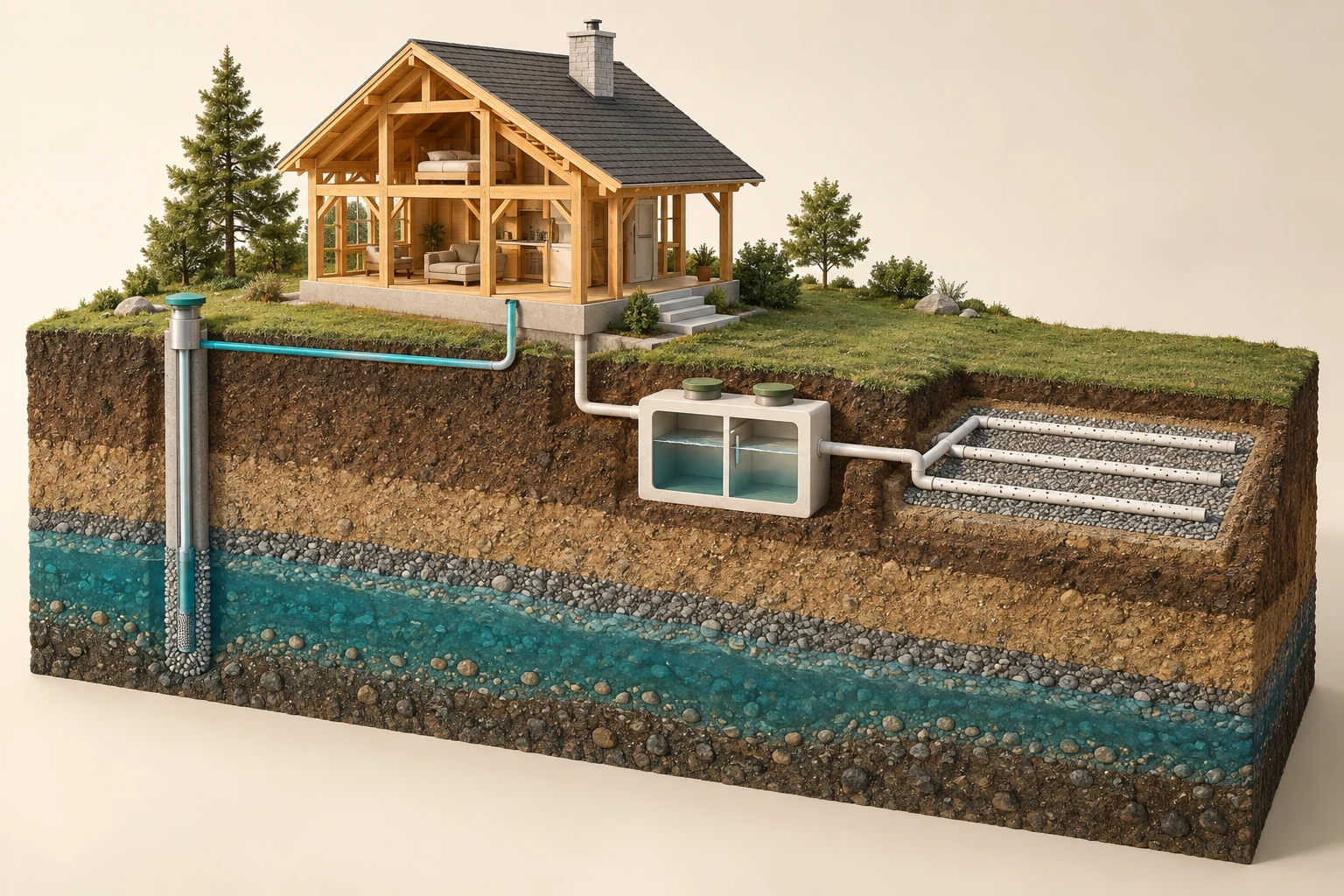
A well, delivery equipment and wastewater system have separate evidence.
The scene distinguishes a water source from a wastewater route and its land context.
Numbers identify the parts explained below.
- Illustrated well location
The left-hand well form identifies a source question. It is not a located, opened or tested well, and it supplies no replenishment or water-quality result.
- House context
Identify the actual delivery equipment and intended household uses. The house model supplies no pump performance or demand record.
- Separate wastewater area
A separate buried wastewater arrangement is illustrated. Water delivery and wastewater capacity or power dependencies need their own scoped records.
What does this illustration leave out?
Actual locations, isolation, capacity, setbacks, groundwater and sample results are not supplied. This illustration explains an idea. It is not an installation guide.
Which actual water source, delivery equipment, separate storage and wastewater arrangements serve this property, and what intended uses and source records define the review?
Explore this with HomeAI ↗Opens an editable question. Nothing is sent until you choose to send it.Plan for conditions the possession visit cannot reproduce
Possession may occur in a season very different from the conditions that challenge the home. Use existing event records and official local information to plan later observations or qualified assessment where needed. Snowmelt, smoke, heat or water-shortage planning should fit the property and household rather than a provincial stereotype. Define an appropriate response when the operating plan reaches its limits.
Emergency alarms and suspected gas or electrical hazards remain immediate safety matters, not scheduled baseline tasks. Follow the source-controlled emergency guidance and qualified clearance. A portable cleaner, a maintenance invoice or a saved plan is not proof that a hazardous situation is safe. HomeAI can help keep the operating record organized, but the measurements, equipment work and actual safety decisions require the appropriate professionals and current official guidance.
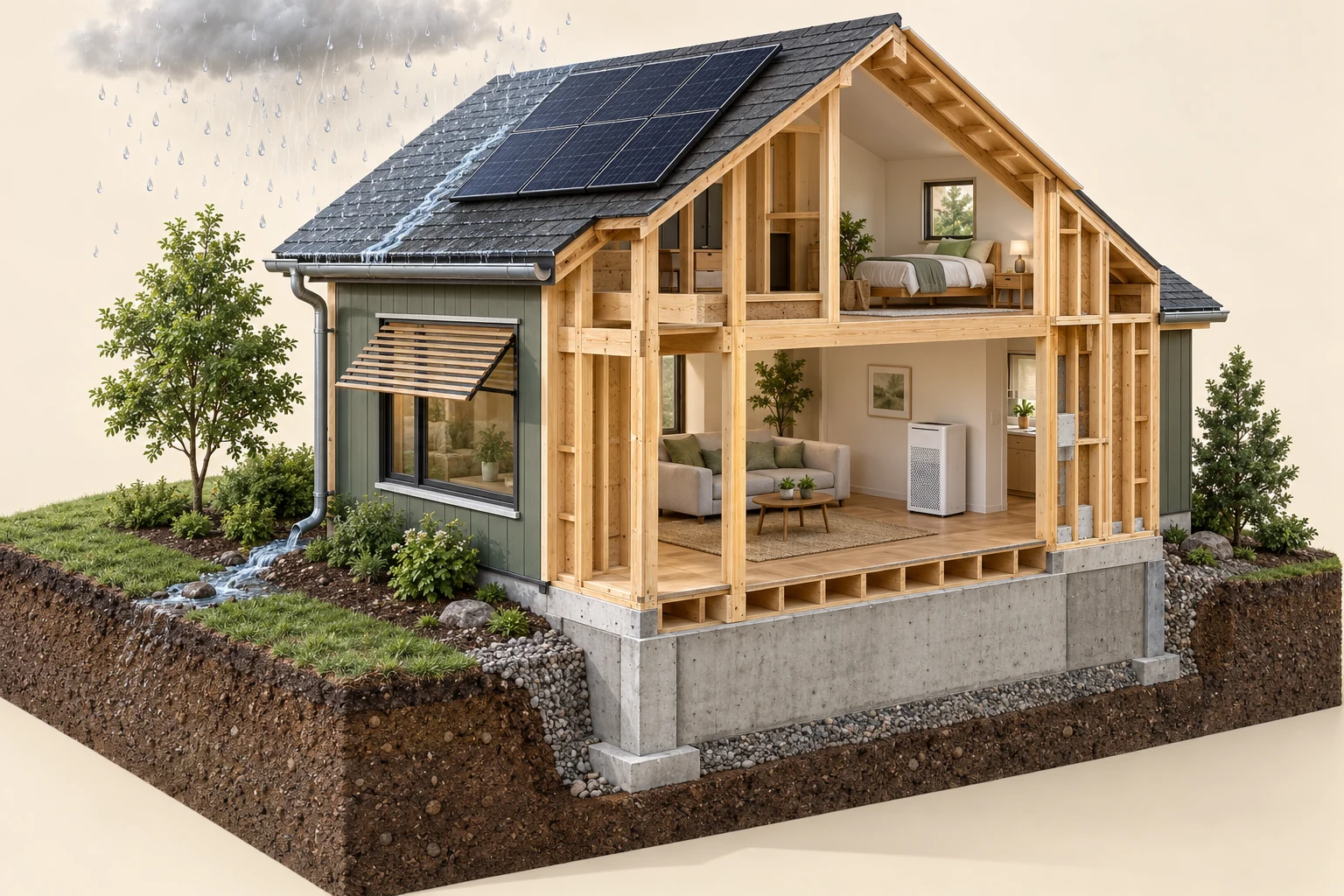
Several climate questions. Different evidence.
An open timber frame above a visible foundation and soil section. Illustrative rain, roof runoff, a gutter and an above-ground downspout discharge. Roof solar panels, exterior window shading and a closed indoor air-cleaner cabinet.
The evidence the illustration cannot supply
Actual ground slope, drainage connections, foundation moisture and flood performance. Solar output, overheating performance and suitable shading for a particular climate. Filter compatibility, achieved clean-air delivery and an appropriate site-specific design. This is a separate conceptual teaching house, not another view of a surveyed property.
Practice the distinction.
A baseline records what is known on day one
A fictional new owner starts a maintenance file after taking possession of a rural property.
Reported observations
- A treatment unit has a service label but no full report.
- A septic pumping invoice identifies a tank visit.
Compare the explanations
Expand each possibility to see the evidence needed to distinguish it. Similar symptoms can have different mechanisms.
Evidence worth preserving
The records identify maintenance events within their stated scope.
Original documents and matched equipment identity.
Separate operating questions
Treatment performance and downstream septic-system condition may require different evidence.
Qualified interpretation and system-specific assessment if appropriate.
A useful next question
Record identity, source, date and exclusions, then prioritize follow-up by intended use and actual uncertainty.
The baseline is not a claim that all systems were inspected or a requirement to order every possible test.
Know what the words mean.
- Baseline
- A dated starting record of known conditions and evidence, not a guarantee of future performance.
- Operating limit
- A condition beyond which the existing plan or equipment cannot be assumed adequate.
Questions to bring
to the conversation.
- Which inspection findings and inaccessible areas still need professional follow-up?
- Where are ordinary shutoffs and controls, and where are their instructions?
- Which baseline observations should be recorded before planned changes?
- What schedule follows the equipment manuals and qualified professional advice?
Separate a showing observation, an existing record and a new professional assessment. Unknown means a question remains; it does not automatically mean a defect.
Use the evidence planner ↗Go to the source.
Original HomeAI explanation informed by these public references. Sources support the underlying guidance; they have not reviewed or endorsed HomeAI. Diagrams are conceptual, and calculator outputs depend on your inputs.
Publication & source review
First published .
- City of Calgary · Home maintenance and hazard awareness
- Health Canada · Guide for radon measurements in homes
- Health Canada · Preventing carbon monoxide exposure
- Natural Resources Canada · After your EnerGuide evaluation
- Natural Resources Canada · How your house works
- Health Canada · Test your well water
- Health Canada · Preventing carbon monoxide exposure
- Environment and Climate Change Canada · Canadian Climate Normals
- Health Canada · Using a portable air cleaner to improve indoor air
Have a question about your home?
Start with the symptom, timing and what you have observed.
Ask HomeAI